
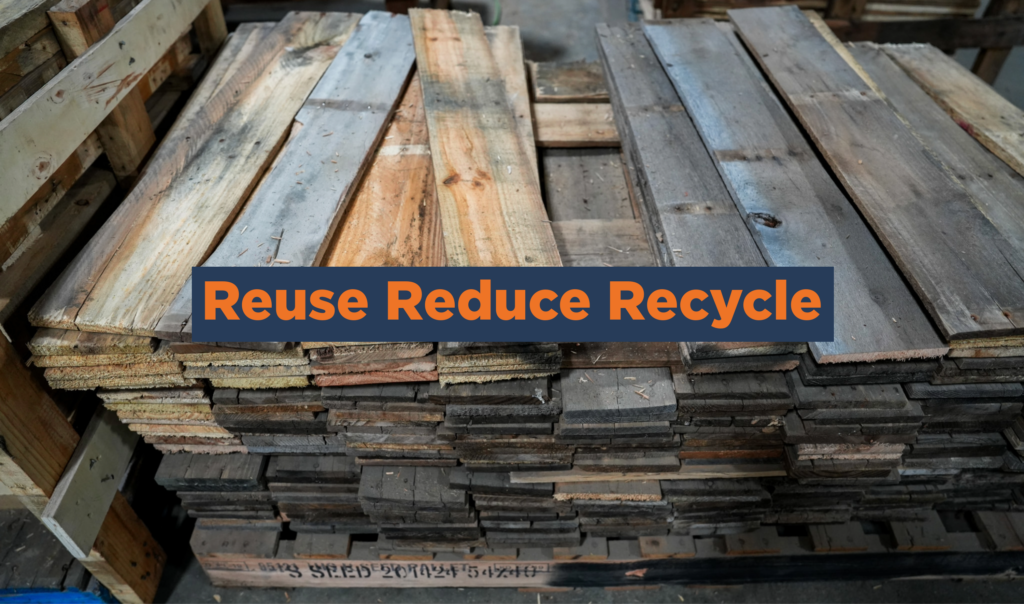
Sustainability discussions in logistics increasingly focus on material reuse and waste reduction. Wood pallets play a significant role in these conversations because they are made from renewable resources and can be reused, repaired, and recycled.
This article explains how wood pallets fit into sustainability strategies in the United States and how logistics teams document responsible material management.
Wood as a renewable material
Wood pallets are produced from renewable forest resources. Forestry programs in the United States emphasize responsible harvesting, replanting, and long-term resource management.
When sourced responsibly, wood pallets support circular material use.
Reuse as a sustainability driver
The most effective sustainability practice is reuse. Wood pallets can be repaired multiple times, extending their usable life and reducing demand for new materials.
Reuse reduces:
- Waste generation
- Energy used in manufacturing
- Transportation emissions tied to replacement
Recycling and end-of-life options
At end of life, wood pallets can be:
- Ground into mulch
- Used as biomass fuel
- Recycled into composite products
This prevents pallets from entering landfills and supports material recovery.
Measuring sustainability impact
Logistics teams often track:
- Pallet reuse cycles
- Repair rates
- Disposal volumes
- Recycling percentages
Documenting these metrics supports sustainability reporting and audit readiness.
Real US reporting scenario
Manufacturers reporting environmental metrics often include packaging and material handling assets. Tracking wood pallet reuse provides tangible sustainability data.
Final takeaway
Wood pallets support sustainability goals through reuse, repair, and recycling. In 2026, transparent documentation is key to demonstrating environmental responsibility.