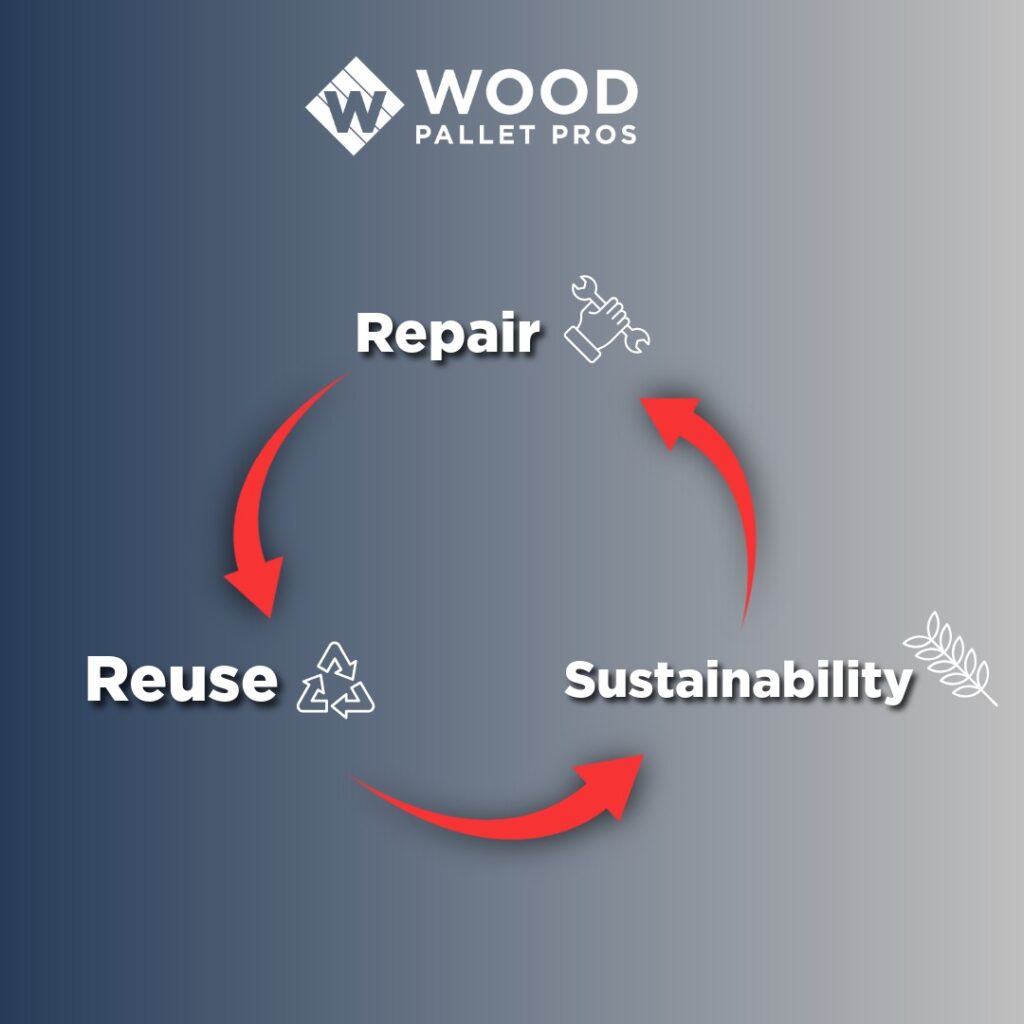
In the beverage supply chain, where thousands of pallets move cases of cans and bottles every day, the lifecycle of the wood pallet behind the scenes often goes un-noticed. Yet how you manage that lifecycle matters: the decisions you make about repairing, reusing, and sustainably retiring pallets affect cost, operations and the environment.
Here’s a breakdown of the key stages in a wood pallet’s lifecycle, what to watch for, and how to build a stronger pallet program aligned with beverage logistics.
Initial Use and Service Life
When a wood pallet is first manufactured, it enters your supply chain, loaded with beverage product. Whether it’s filled with glass bottles or aluminum cans, frequent handling, transit stress, stacking in racked storage, and exposure to moisture or temperature variations all impact its lifespan. As research notes, the “utilization phase” sets the tone for how many cycles a pallet can survive before repair or retirement.
In beverage operations, the pallet often faces rigorous conditions—rapid turnover, stacked high, moved constantly, and potentially exposed to moisture from chilled products. A strong initial specification means fewer early failures.
Inspection and Repair
Rather than discarding pallets the moment they show damage, many beverage supply chains adopt inspection and repair programs to extend useful life. A study of wood-pallet repair and remanufacturing found that repair is a key way to enhance pallet environmental performance.
Repair activity might include replacing broken boards, tightening fasteners, reinforcing stringers, or re-nailing joints. For beverage pallets, consistency in deck strength and integrity is important to prevent load failures that could lead to product damage or consumer-safety issues.
Implementing a formal repair program allows you to treat each pallet as an asset—not simply a disposable item. This can deliver both lower cost over time and a reduced environmental footprint.
Reuse Across Cycles
Once repaired and inspected, pallets can return to service. Reuse is a major contributor to sustainability in the wood pallet world. For example: more than 90% of wood pallets never go to landfill.
In beverage operations this means planning for multiple cycles (loading, transit, unloading, reload) and ensuring your pallets are standardized so that forklift handling, rack storage, and trailer load/unload proceed smoothly. A consistent pallet fleet that’s repaired and returned to service helps minimize downtime and product-damage risk.
Retirement and End-Of-Life Management
Eventually, even well-maintained pallets must be retired. The end-of-life stage doesn’t have to mean landfill. Wood pallets can enter recycling streams: chipped into mulch, used for biomass fuel, or remanufactured into new boards.
For beverage supply chains concerned with ESG (environmental, social & governance), tracking how many pallets are diverted from landfill and reused or remanufactured is increasingly important.
Why It Matters for Beverage Logistics
- Cost savings – Repairing and reusing pallets instead of buying new each time reduces pallet-cost per load.
- Operational reliability – A well-managed pallet fleet means fewer failures, fewer product damages, fewer disruptions.
- Sustainability credentials – Beverage brands are under pressure to reduce waste and optimize supply-chain footprint; pallet lifecycle management supports that.
- Supply chain alignment – Standardizing pallet specs, repair schedules and refresh cycles means consistency across plants, DCs and carriers.
Best Practices for a Beverage Pallet Lifecycle Program
- Set pallet specification standards for your beverage loads, including weight, stacking, and handling conditions.
- Create an inspection schedule—determine when pallets are checked, which criteria (broken boards, fasteners, integrity) trigger repair or retirement.
- Partner with a repair/refurbish service that tracks pallet condition, materials used for repair, and disposal options.
- Track metrics: number of cycles per pallet, repair cost per pallet, failure rate, percentage diverted from landfill, cost per load.
- Communicate supply-chain value: include pallet lifecycle performance in your business narrative—e.g., “our pallets average 8 cycles and avoid X tons of waste per year.”
Lifecycle-thinking isn’t a “nice-to-have” in modern beverage logistics—it’s a key lever of cost control, operational excellence and sustainability.
If you’re looking to upgrade your pallet lifecycle strategy for beverage loads; repair, reuse, standardization and end-of-life optimization, call 309-734-8817 to talk to a Wood Pallet Pro today. Top of Form