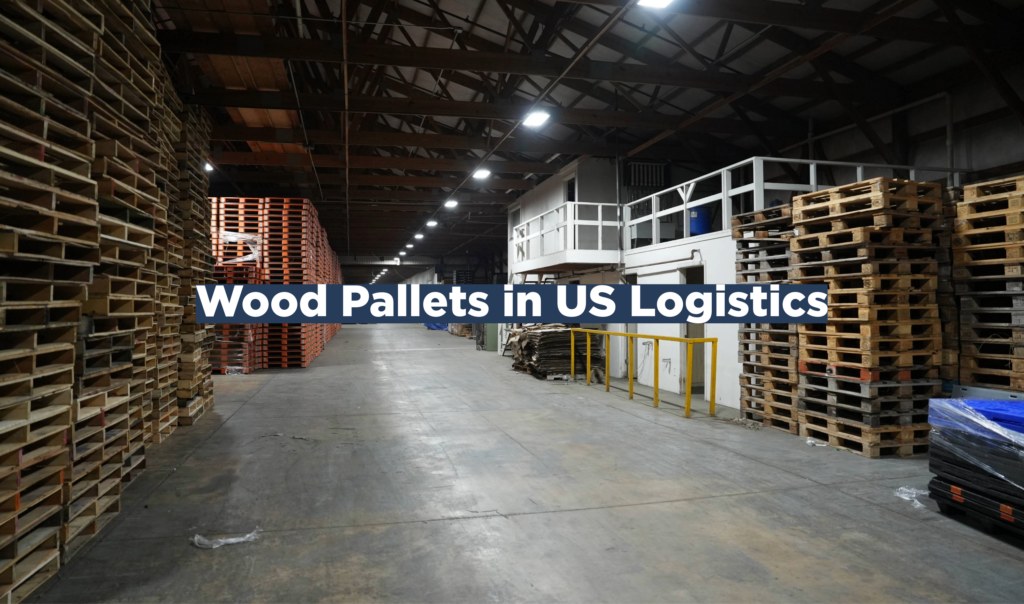
Despite new packaging options entering the market, wood pallets remain the backbone of logistics in the United States. In 2026, millions of pallets move daily through warehouses, manufacturing plants, ports, and retail distribution centers, and the majority of them are still made of wood.
This blog explains why wood pallets continue to dominate US logistics, how they fit into real operational environments, and why they remain a critical component of the American supply chain.
The scale of wood pallet usage in the US
Wood pallets are deeply embedded in US logistics infrastructure. They are widely available, easy to source, and compatible with nearly every material handling system in operation today.
Their continued use is driven by:
- Established supply networks
- Compatibility with forklifts and pallet jacks
- Repairability and reuse
- Acceptance across domestic shipping lanes
In many regions, wood pallets are the default platform for freight movement.
Flexibility across industries
Wood pallets are used across a wide range of industries, including:
- Manufacturing
- Agriculture
- Construction materials
- Food packaging (non-direct contact)
- Retail distribution
Their structural design supports heavy loads and irregular freight that may not fit standardized packaging formats.
Repair and reuse in real operations
One of the biggest advantages of wood pallets is their repairability. Broken boards can be replaced, extending pallet life and reducing the need for full replacement.
In closed-loop or regional shipping networks, wood pallets are often repaired multiple times before reaching end of life, making them a practical choice for cost-conscious operations.
Availability during demand spikes
During seasonal peaks or supply chain disruptions, availability matters. Wood pallets are produced domestically at scale, which helps buffer logistics operations from shortages.
This availability makes wood pallets especially valuable in industries with unpredictable volume swings.
Cost considerations
Wood pallets typically have lower upfront costs compared to alternatives. For operations that do not require long-term reuse or specialized environments, this lower entry cost remains attractive.
When pallets are used in one-way or limited-cycle applications, wood often provides a strong cost-to-performance balance.
Environmental considerations
Wood pallets are made from a renewable resource and can be reused, repaired, or recycled into other wood products. When managed properly, they can support waste reduction goals through extended use and material recovery.
Final takeaway
In 2026, wood pallets remain essential to US logistics because they are flexible, repairable, widely accepted, and cost-effective for many use cases. While pallet needs vary by operation, wood pallets continue to serve as a foundational logistics asset.